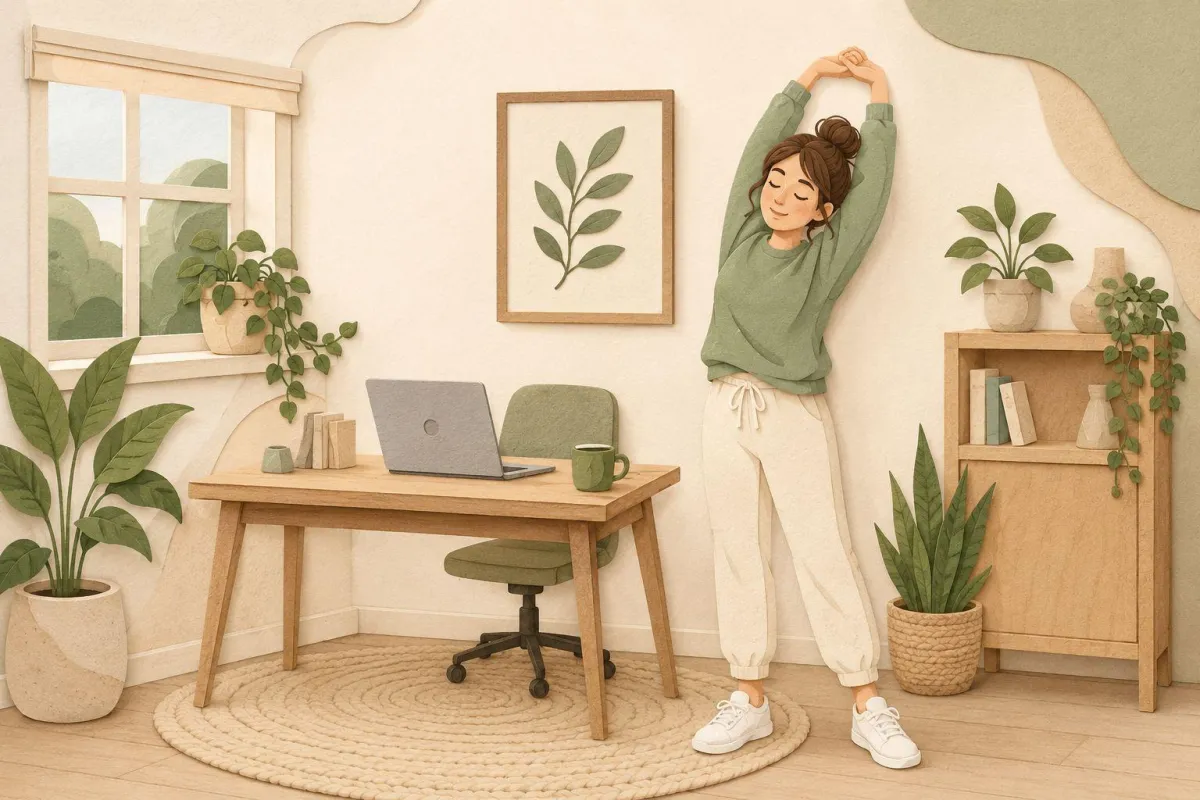
How to Move More During the Day Without Finding More Time
Introduction
One of the most common things I hear is: “Ash, I just don’t have the time.”
And sometimes... fair enough.
Work can be demanding, family life is busy, commuting eats into your day and somehow you can start Monday morning, blink twice and it’s already Thursday afternoon.
Finding another full hour to exercise isn’t always realistic.
Luckily, moving more doesn’t always require one.
A phone call can become a walk. Lunch can finish with ten minutes outside. You can take the stairs, walk part of your commute or get up from your desk while your computer installs yet another update you definitely didn’t ask for.
These things might sound small, but that’s exactly why they work so well in everyday life.
They fit. And when something fits, you’ve got a much better chance of doing it again tomorrow.
Quick answer: how can you move more during the day?
Start by looking for opportunities to replace some of the sitting, waiting or convenience already in your day with movement.
Current UK physical activity guidance encourages adults to move regularly, reduce extended periods of sitting and accumulate activity throughout the week.
You don’t have to wait for a perfect 30 or 60-minute exercise window before moving becomes worthwhile.
Here are some easy places to start:
Commute: walk part of the journey or get off one stop earlier.
Phone calls: stand up, or turn them into walking calls.
Lunch break: finish lunch with a short walk.
Working day: get up regularly instead of sitting for hours.
Shopping: park further away or carry your shopping.
Between floors: take the stairs when practical.
Evening: walk while dinner cooks or take a short walk afterwards.
Waiting time: walk rather than automatically sitting or scrolling.
None of these requires you to completely redesign your life.
You’re just using parts of it slightly differently.
1. Find the movement already in your day
Modern life gives us plenty of opportunities to avoid using our bodies.
We sit while working, travelling, eating and relaxing. Lifts carry us upstairs, food arrives at the door and your phone can now accomplish an impressive number of tasks without you needing to move anything except your thumb.
Convenient? Absolutely.
Great for daily movement? Not at all.
So instead of trying to invent an entirely new routine, start with the things you already do.
Your commute
You don’t have to walk all the way to work.
Maybe you:
get off the bus or tube one stop earlier
walk to the station instead of taking another bus
park ten minutes further away
take the stairs instead of the escalator
walk the final part of your journey
Ten extra minutes each way is already twenty minutes of additional movement without creating a new appointment in your diary.
Phone calls
If you’re going to spend 20 minutes catching up with somebody anyway, your legs might as well join the conversation.
Work call? Stand up.
Chatting to a friend? Go for a walk.
On hold with your broadband provider for 45 minutes?
Congratulations. You may have accidentally completed your cardio for the day.
Meal times
You already have to eat, so this is another useful place to attach movement.
Finish lunch and walk for ten minutes.
Go outside after dinner.
Take a lap around the block before getting back to your desk.
Research suggests that walking after eating can also help reduce the rise in blood glucose that happens after a meal.
That doesn’t mean every sandwich now requires a medical-grade lap of the local park, but it does make a short post-meal walk a pretty useful habit.
2. Break up long periods of sitting
This one matters particularly if you work at a desk.
You can train several times a week and still spend an enormous amount of the rest of your day sitting.
Think about it: you sit on the commute, sit at work, sit through meetings, sit at lunch, sit on the commute home.
Then finally arrive home exhausted from your long day of...
sitting.
The NHS recommends reducing time spent sitting and breaking up long periods of inactivity with movement.
Now you don’t have to restructure your whole workday to do that.
Try things like:
walking to speak to a colleague instead of messaging them
standing when you take a phone call
refilling your water bottle regularly
taking a short walk at lunch
getting up between meetings
using the stairs
walking while thinking through a problem
I’m not suggesting you spend your working day wandering aimlessly around the office pretending to look busy.
Although, depending on where you work, somebody may already have perfected that technique.
Jokes aside, the aim is simply to stop sitting for hours without noticing.
3. Use the small pockets of time you already have
This is where people often overlook movement because it doesn’t look like a workout.
We tend to think in neat boxes:
Gym: 60 minutes.
Run: 30 minutes.
Workout: completed.
Anything smaller somehow doesn’t feel worth doing, but small periods of movement add up surprisingly quickly.
For example, a day could add up like this:
Walk part of your commute: 10 minutes
Walk after lunch: 10 minutes
Walking phone call: 15 minutes
Take the stairs a few times: 5 minutes
Short evening walk: 10 minutes
That’s 50 minutes total.
You don’t need to do every one of these every day.
The point is that you can accumulate quite a bit of movement without ever finding one spare 50-minute block.
4. Attach movement to something you already do
This is probably one of the easiest ways to make movement more consistent.
Give it a cue. Instead of trying to constantly remember:
“I need to move more today.”
Attach movement to something that already happens.
For example:
After lunch → walk for ten minutes
Phone call → stand up or walk
Arrive at the station → take the stairs
Finish work → walk before going home
After dinner → short evening walk
Lunch becomes lunch plus a walk, your commute finishes slightly earlier so the last section is on foot, a phone call becomes a reason to get out of your chair.
When movement has a regular place in your day, you rely much less on remembering or waiting until you suddenly feel motivated.
I’d start with one or two of these: do them consistently, then build from there.
5. Make movement enjoyable enough to repeat
You also don’t have to spend your walk staring at the step counter on your phone.
Use the time.
Put on music that improves your mood. Listen to a podcast or audiobook. Call somebody you’ve been meaning to catch up with. Walk somewhere green or explore a part of London you normally rush past without noticing.
Or occasionally take the headphones out and give yourself ten minutes without another notification, screen or person asking something from you.
Friedrich Nietzsche once wrote:
“All truly great thoughts are conceived by walking.”
Whether every great thought arrives during a walk is debatable.
Some walks may produce life-changing ideas. Others may simply help you decide what you’re having for dinner.
In my opinion, both are valuable.
There’s even research suggesting that walking can temporarily improve creative thinking compared with sitting.
So your body gets to move while your brain gets a little breathing room. I think that’s a pretty decent return for putting one foot in front of the other.
Conclusion
So, how do you move more during the day without finding more time?
Start with the day you already have.
1. Find the movement already there
Use your commute, phone calls, meals and everyday journeys.
2. Break up the sitting
Especially if you spend most of your working day at a desk.
3. Use small pockets of time
Five or ten minutes still adds to your overall movement.
4. Give movement a cue
Attach it to something you already do every day.
5. Make it enjoyable
Music, podcasts, friends, nature or simply a bit of time to yourself.
You don’t need to suddenly find another hour.
Start with ten minutes.
Then find another ten somewhere else.
Over time, those little pockets of movement become part of your normal routine.
Somewhere along the way, you stop moving because you feel like you have to and start doing it simply because it has become part of your day.
Your challenge
Add one walk to your day.
Choose something you already do, such as lunch, your commute or a phone call, and attach a ten-minute walk to it for the next seven days.
Until next time,
Ash – The Health Coach
Get Health. Heal Trying.
About Ash The Health Coach
I’m Ash, a Personal Trainer and Health Coach in London. I started as a PT, but years of working with people taught me that improving your health goes far beyond what happens during an hour in the gym.
My aim is to help you move better, build strength, manage body fat and understand your body well enough to look after your health for life.
If you’d like more support, you can explore my Personal Training services or subscribe to Heal the Human for practical lessons on movement, nutrition, recovery and tracking.
Sources & Further Reading
UK Chief Medical Officers, Physical Activity Guidelines
NHS, Physical activity guidelines for adults aged 19 to 64
Research on walking after meals and post-meal glucose
Research on breaking up prolonged sitting with light activity
Oppezzo & Schwartz, research on walking and creative thinking


